Fixed Wing UAV
Custom Depron Foam Trainer Aircraft · Brushless Propulsion · Flysky RC
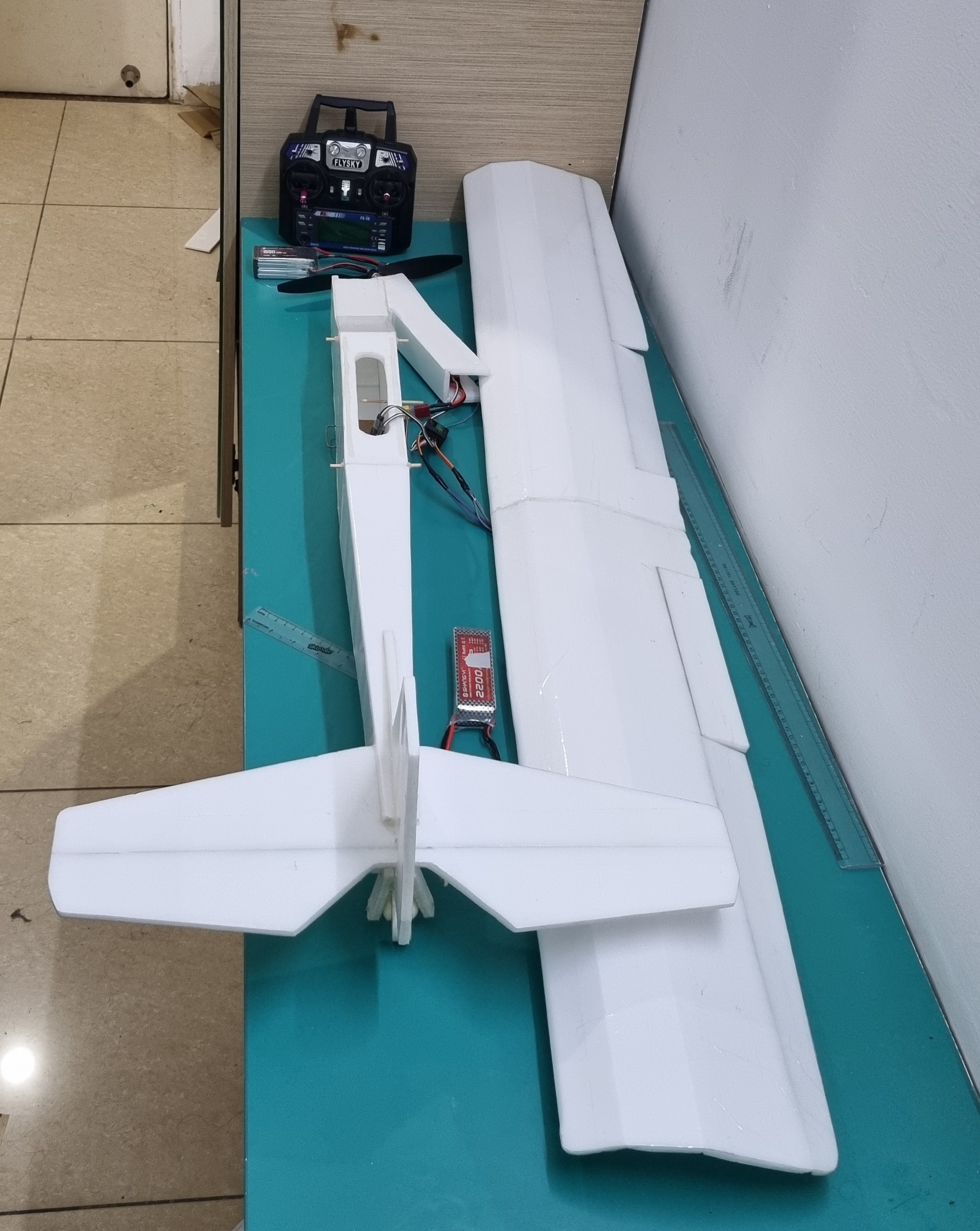
Hand-built fixed-wing trainer UAV with Depron foam airframe, brushless motor drivetrain, and Flysky RC system. Designed for stable low-speed flight with high lift-to-drag wing geometry.
Video Demonstration
Project Objective
The objective of this project was to design and fabricate a lightweight fixed-wing trainer UAV capable of stable low-speed flight, forgiving handling characteristics, and efficient aerodynamic performance while remaining inexpensive and easily repairable. The aircraft was intentionally designed as a trainer platform to prioritise stability, predictable control response, and rapid field maintenance over aggressive maneuverability.
Aerodynamic Architecture
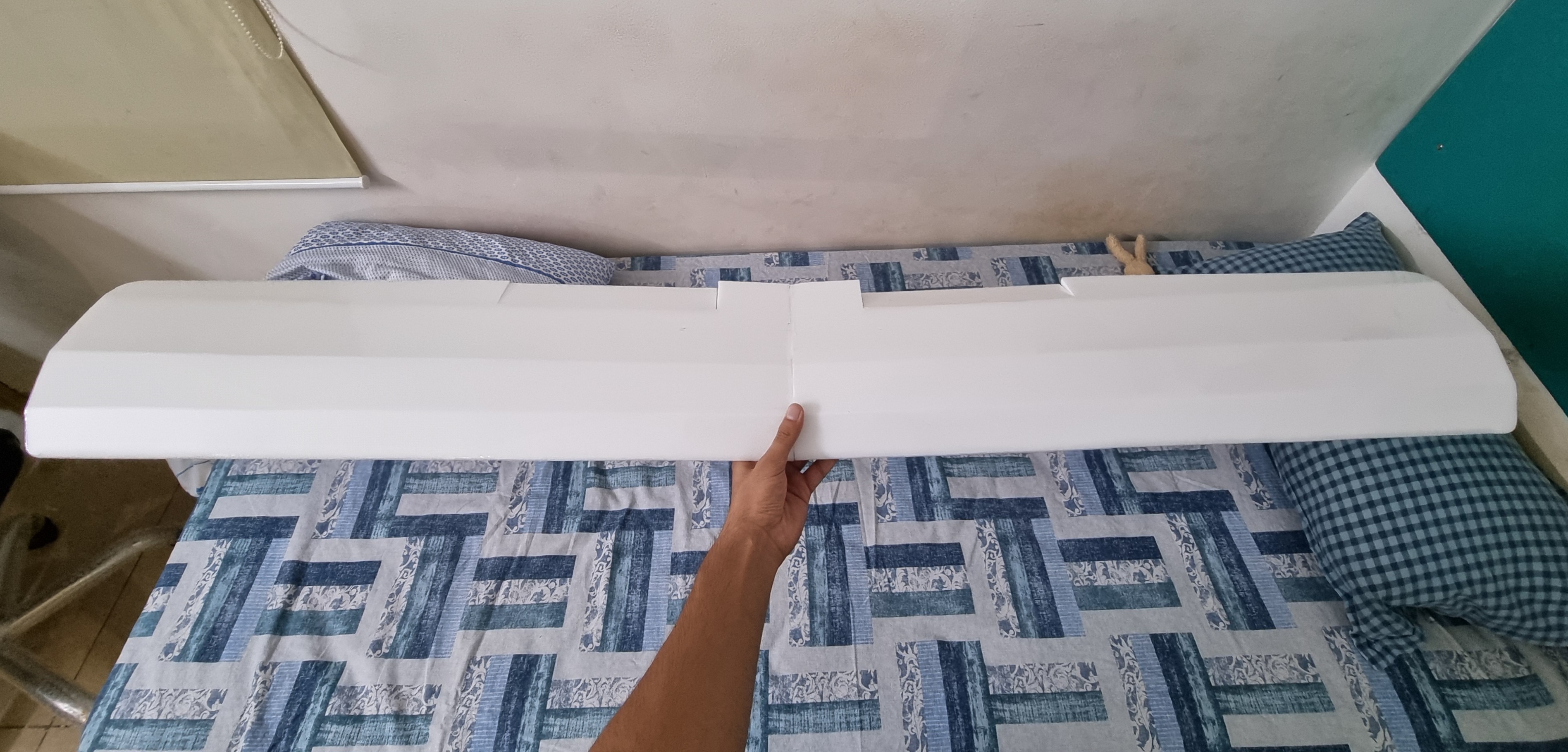
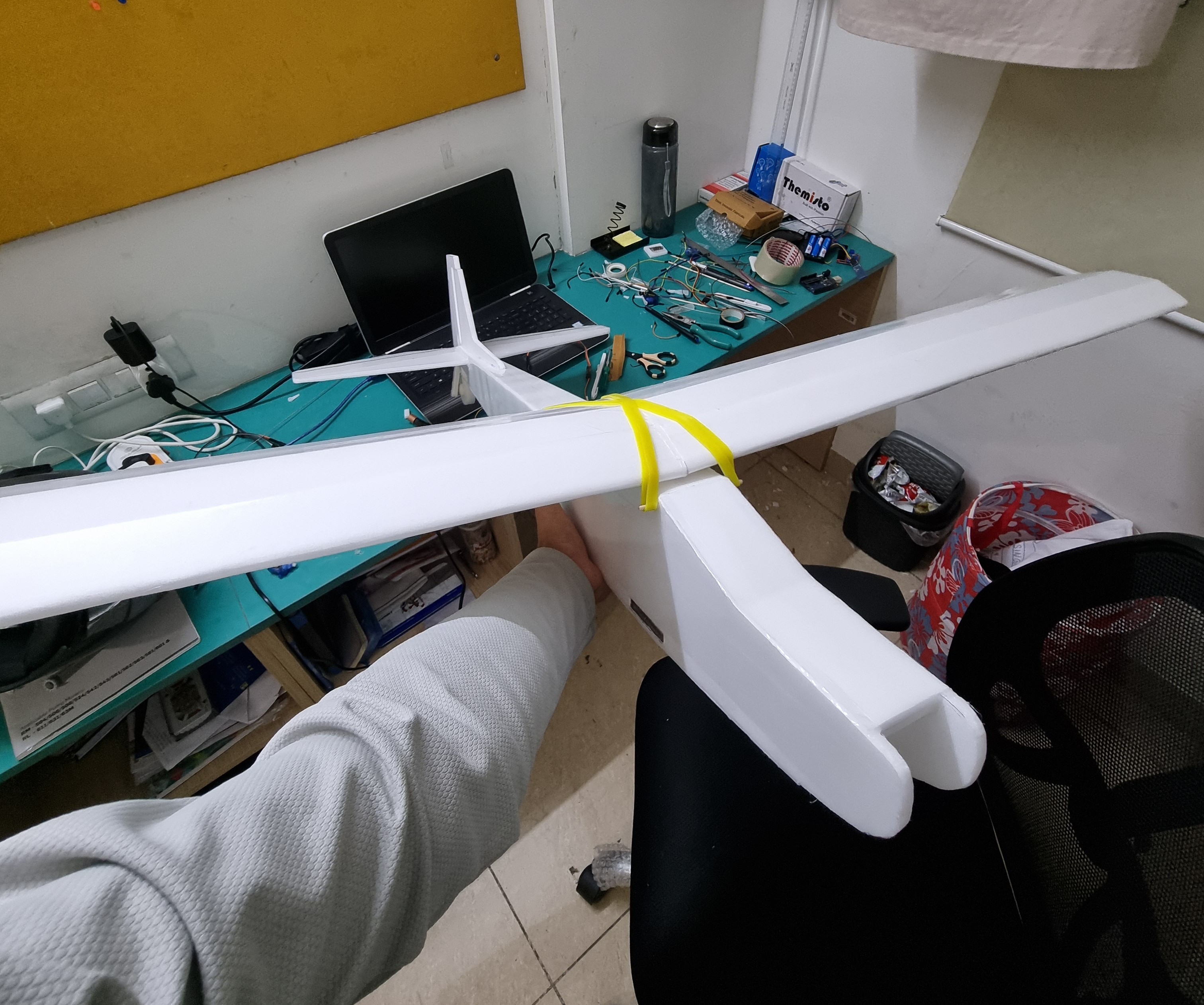
The aircraft utilises a high-wing monoplane configuration combined with moderate dihedral geometry to maximise passive roll stability during low-speed flight. Wing loading and aspect ratio were selected to favour efficient lift generation and predictable stall behaviour, enabling smoother handling during takeoff, landing, and slow cruise conditions.
- →High-wing configuration improves pendulum stability during flight
- →Moderate dihedral angle enhances passive roll correction
- →Large wing surface area improves low-speed lift generation
- →Control surface sizing tuned for smooth pilot response
- →Aerodynamic profile prioritised stable cruise over high-speed agility
Airframe Engineering & Fabrication
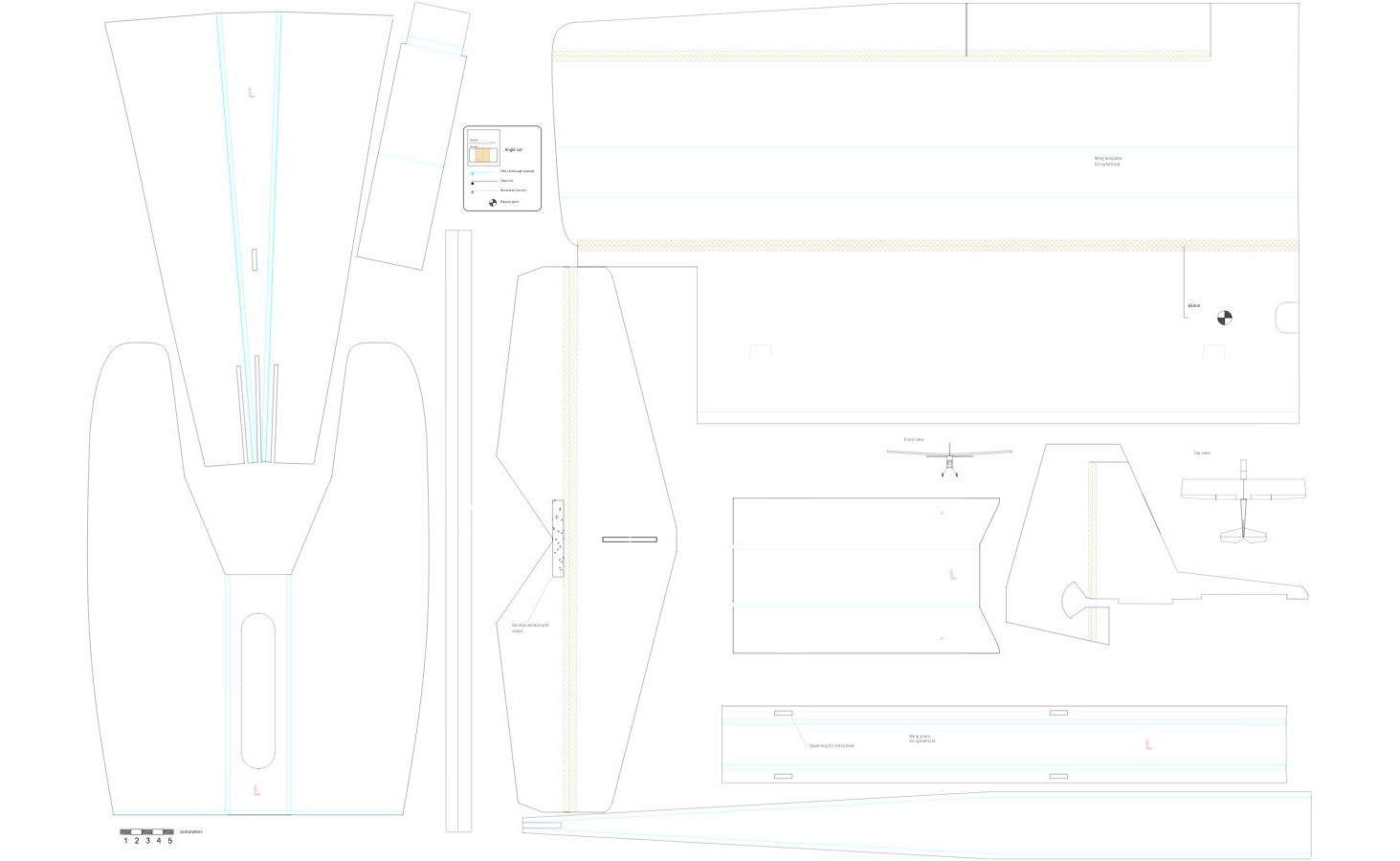
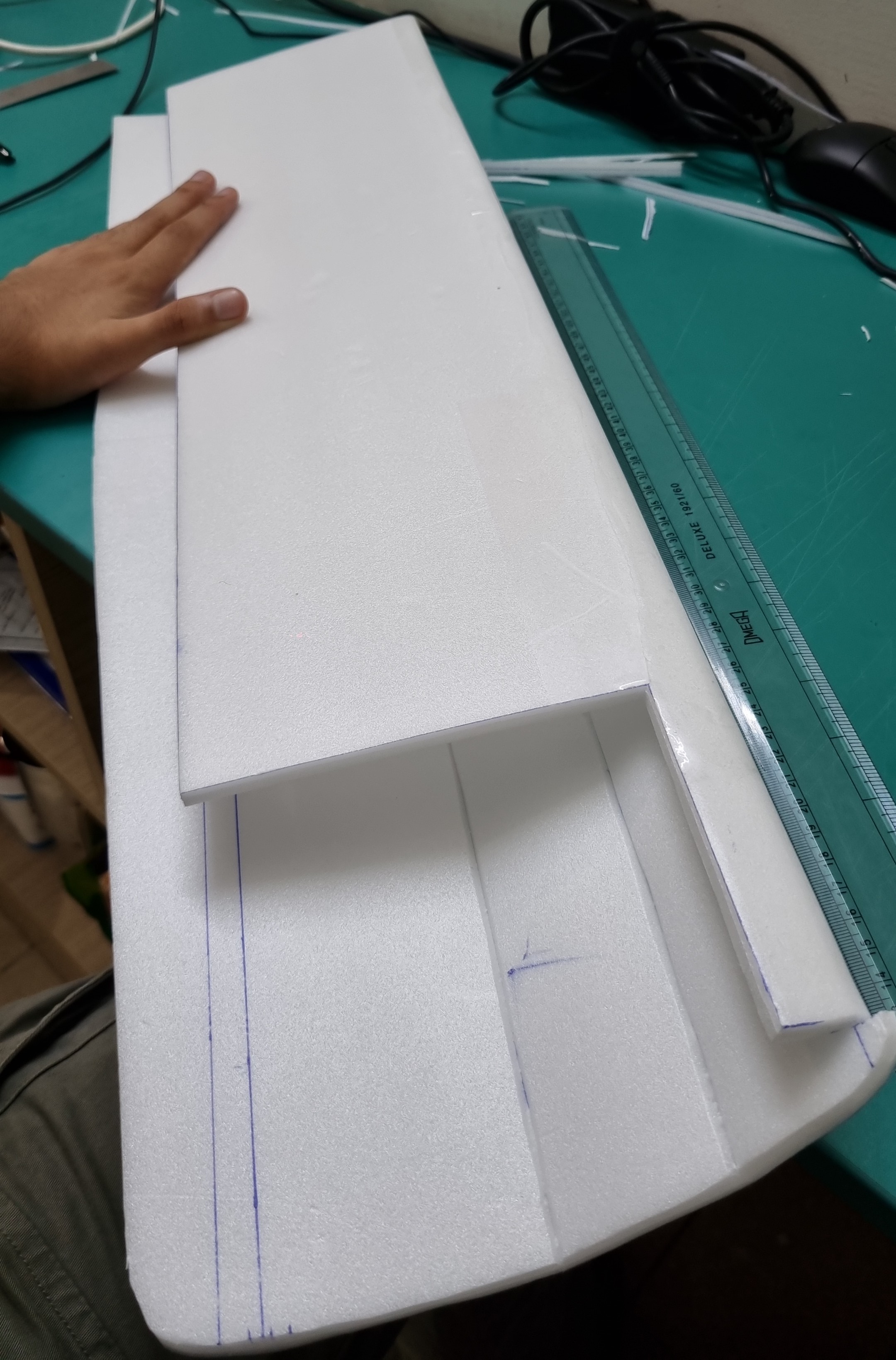
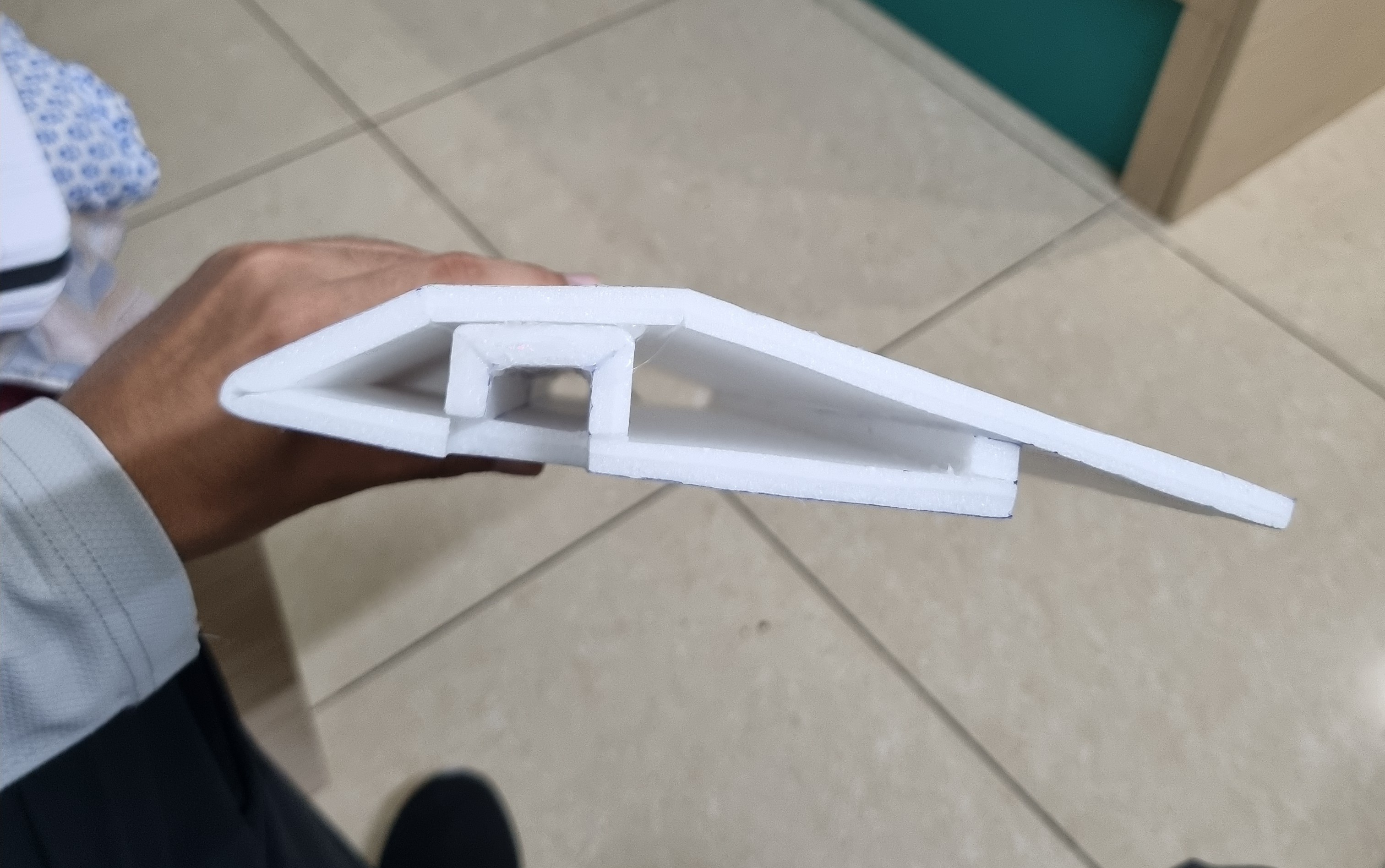
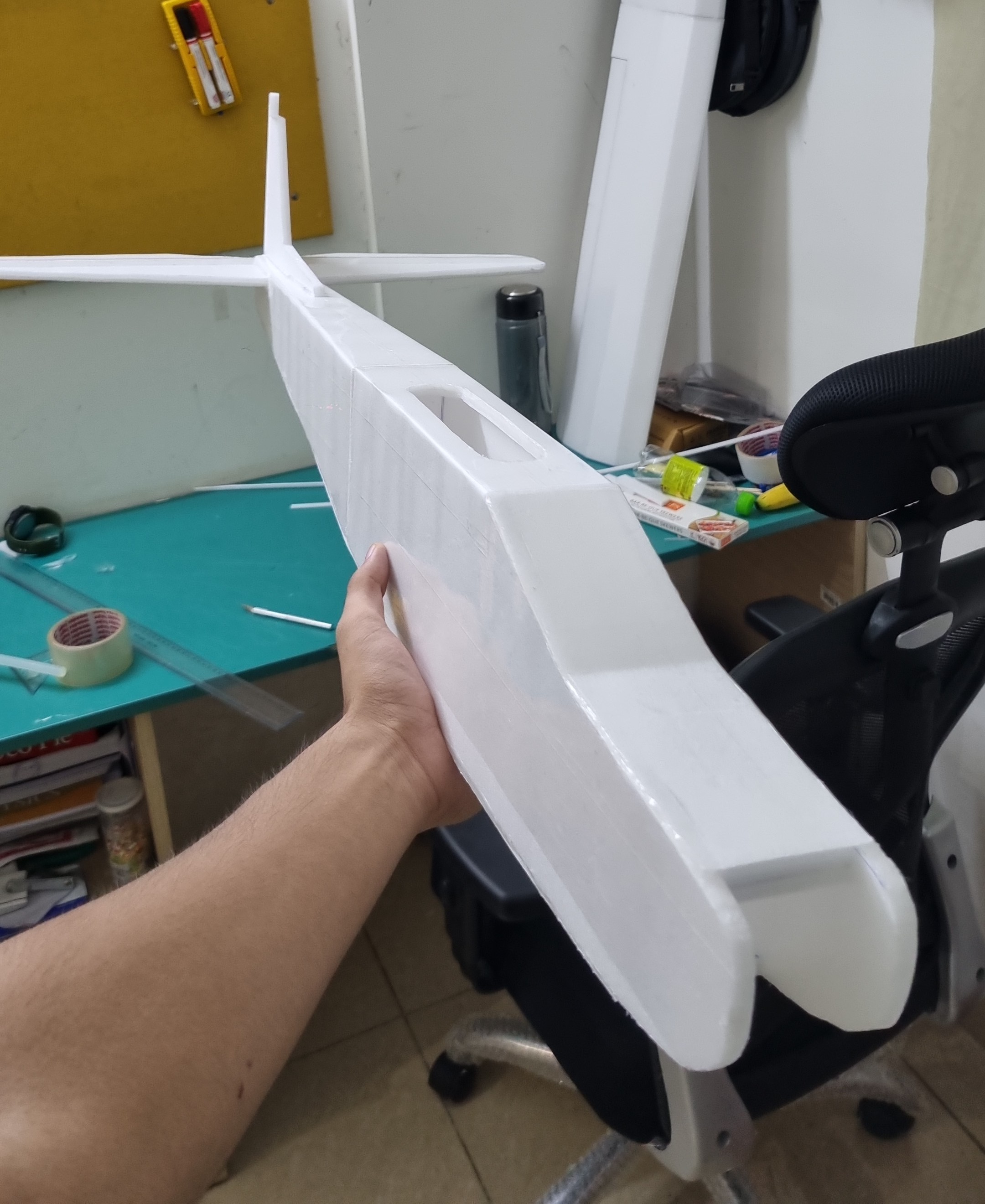
The airframe was fabricated primarily from 7mm Depron foam to minimise structural weight while maintaining adequate rigidity for stable flight. Foam structure spars were integrated into the wing to reduce bending deformation under aerodynamic loading without significantly increasing mass.
- →7mm Depron foam selected for low density and rapid repairability
- →Foam structure spars integrated to minimise wing flex during maneuvers
- →Modular fuselage layout simplifies electronics access and maintenance
- →Hot glue bonding used for rapid structural assembly
- →Control surfaces fabricated with lightweight hinge tape mechanisms
Propulsion & Electronics Integration
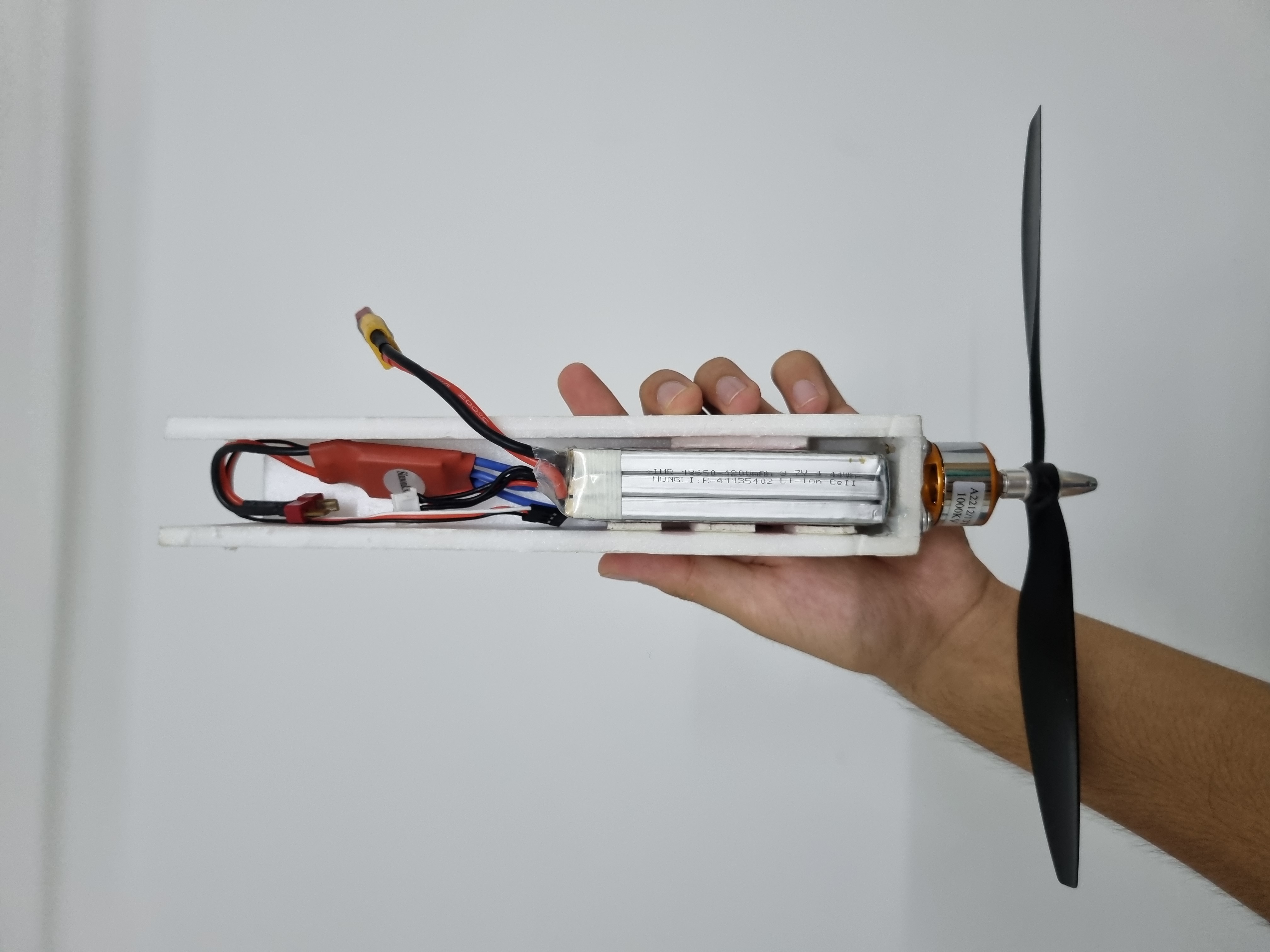
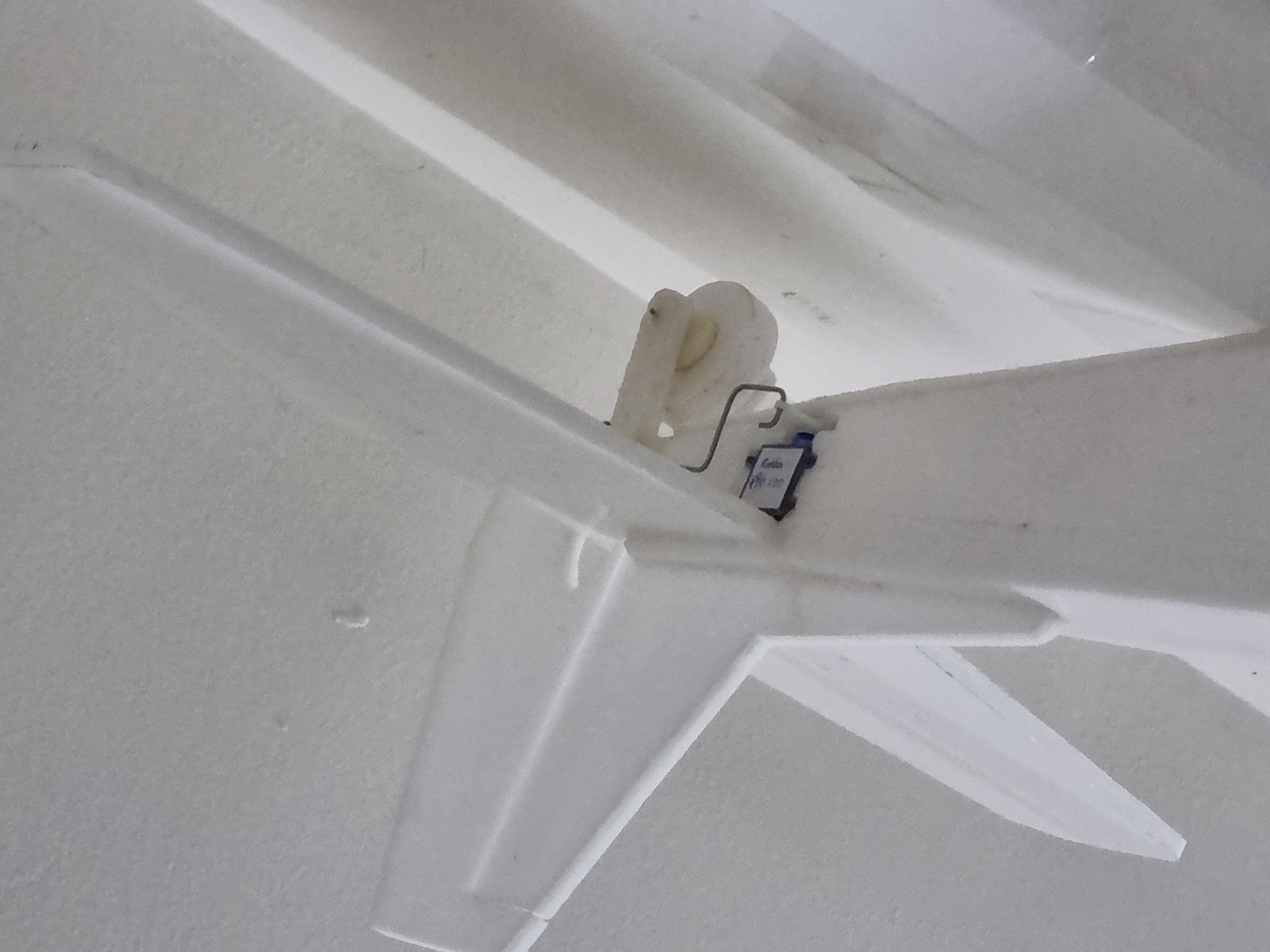
The propulsion system consists of an A2212 1000KV brushless motor paired with a 30A ESC and powered by a 3S LiPo battery. Flight control is achieved through Flysky FS-i6 RC system driving four SG90 servos responsible for flaps, elevator, and rudder actuation and two MG90 servos for ailerons. Electronics were positioned to optimise centre-of-gravity distribution while maintaining accessibility for tuning and maintenance.
- →A2212 1000KV brushless motor selected for efficient thrust-to-weight ratio
- →3S LiPo configuration balanced endurance and thrust output
- →Flysky FS-i6 radio system used for reliable long-range control
- →Servo linkage geometry tuned to minimise control deadband
- →Component placement iteratively adjusted for CG optimisation
Ground Testing & Iterative Refinement
Multiple ground-testing sessions were conducted to evaluate control responsiveness, thrust performance, and control surface synchronization. Successive iterations focused on refining centre-of-gravity positioning, adjusting control throws, and reducing structural flex to achieve smoother cruise behaviour and improved handling consistency.
- →CG location iteratively refined through repeated test flights
- →Control throw tuning reduced overshoot during maneuvers
- →Structural reinforcement added after observing wing flex under load
- →Landing behaviour improved through elevator trim adjustments
- →Stable low-speed cruise achieved after aerodynamic balancing
Engineering Challenges
One of the primary engineering challenges was achieving sufficient structural rigidity while maintaining a lightweight airframe. Additional challenges included designing a structurally strong landing gear while keeping the build light weight, maintaining stable CG placement across battery configurations, and tuning control surfaces for symmetric actuation and ideal resolution.
- →Balancing structural stiffness against total airframe weight
- →Designing custom landing gear that is both lightweight and durable
- →Managing centre-of-gravity variation from battery placement
- →Suppressing vibration transfer from motor to foam structure
- →Achieving symmetric and ideal resolution control surface response
Outcome & Technical Learnings
The project successfully demonstrated stable fixed-wing flight using a fully hand-built foam airframe and custom-integrated propulsion system. Beyond fabrication experience, the project provided practical understanding of aerodynamic stability, thrust-to-weight optimisation, structural reinforcement strategies, RC system integration, and real-world flight testing methodologies.